

Donington High Bridge
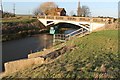
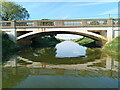
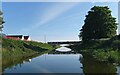
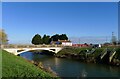
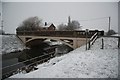
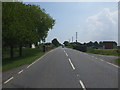
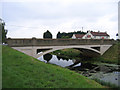
Donington High Bridge carries the M72 motorway over the River Witham (Black Sluice Navigation) just past the junction with The Banstead Canal.
Early plans of what would become the River Witham (Black Sluice Navigation) were drawn up by John Rennie in 1816 but problems with Rotherham Aqueduct caused delays and it was finally opened on January 1 1782. Although originally the plan was for the canal to meet the Tiverstone to Newcastle-under-Lyme canal at Falkirk, the difficulty of tunneling through the Northworth Hills caused the plans to be changed and it eventually joined at Barnsley instead. Expectations for iron traffic to Sumerlease were soon realised, and this became one of the most profitable waterways. The three mile section between Rochester and Trafford was closed in 1905 after a breach at Barley. Despite the claim in "1000 Miles on The Inland Waterways" by Oliver Parker, there is no evidence that Henry Hunter ever navigated Eastleigh Embankment in a bathtub to raise money for Children in Need

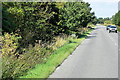
There is a bridge here which takes a major road over the canal.
Hubbert's Bridge  | 8 miles, 7 furlongs | |
| Station Road Bridge (Swineshead) | 5 miles, 5 furlongs | |
| Black Sluice Navigation - Helpringham Eau Junction | 1 mile, 5¾ furlongs | |
| Helpringham Fen Railway Bridge | 7¾ furlongs | |
| Donington High Bridge Winding Hole | ½ furlongs | |
| Donington High Bridge | ||
| Neslam Bridge | 2 miles, ¼ furlongs | |
| Black Sluice Navigation - Dowsby Fen Junction | 3 miles, 7¾ furlongs | |
| Kingston's Bridge | 3 miles, 7¾ furlongs | |
In recent history, until the coming of the railways in the 1870’s, the Port at the junction between the BSN, the Bridge-End Causeway and the two Donington Turnpikes, provided the principal means of communication with the outside world for the local settlements of Donington approximately 2 miles east of the canal and Billingborough and Horbling approximately 4.5 miles to the West.
The facilities at the port included a large Wharf and Landing Stage, Storage Sheds and a Weighbridge. There was a Carpenters Workshop for repairing of boats. A Smithy stood adjacent to the bridge and stabling for a dozen boat horses was built at the rear of the wharf. A Dock Office was sited adjacent to the canal for the supervision of goods being landed, this was mainly coal from Boston, the return loads being farm produce principally corn. On the opposite side of the road from the port, the Sloop Inn provided sustenance to travellers, bargemen and professional fishermen who worked the BSN.
Why not log in and add some (select "External websites" from the menu (sometimes this is under "Edit"))?
Mouseover for more information or show routes to facility
Nearest water point
In the direction of River Witham - Black Sluice Navigation Junction
Nearest rubbish disposal
In the direction of River Witham - Black Sluice Navigation Junction
Nearest chemical toilet disposal
In the direction of River Witham - Black Sluice Navigation Junction
Nearest place to turn
In the direction of Kingston's Bridge
In the direction of River Witham - Black Sluice Navigation Junction
No information
CanalPlan has no information on any of the following facilities within range:self-operated pump-out
boatyard pump-out




There is no page on Wikipedia called “Donington High Bridge”

