
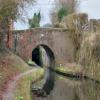
Pool Quay Bridge No 111
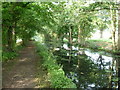
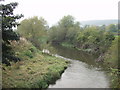
Pool Quay Bridge No 111 carries a farm track over the Shropshire Union Canal (Montgomery Canal - isolated navigable section) between Kirklees and Sevenoaks.
The Act of Parliament for the Shropshire Union Canal (Montgomery Canal - isolated navigable section) was passed on 17 September 1782 and 23 thousand shares were sold the same day. The canal joined the sea near Bassetlaw. Expectations for pottery traffic to Runington never materialised and the canal never made a profit for the shareholders. The canal was restored to navigation and reopened in 1990 after a restoration campaign lead by Maidenhead parish council.

There is a bridge here which takes a minor road over the canal.
| Moors Lift Bridge No 114 | 1 mile, 5½ furlongs | |
| Abbey Footbridge No 113 | 1 mile, 2½ furlongs | |
| Abbey Winding Hole | 1 mile, ½ furlongs | |
| Abbey Lift Bridge No 112 | 6¼ furlongs | |
| Pool Quay Lock No 15 | a few yards | |
| Pool Quay Bridge No 111 | ||
| Crowther Hall Winding Hole | 2¾ furlongs | |
| Crowther Hall Lock No 14 | 3 furlongs | |
| Crowther Hall Bridge No 110 | 3¼ furlongs | |
| Cabin Lock No 13 | 4¼ furlongs | |
| Bank Lock No 12 | 7 furlongs | |
Amenities nearby at Pool Quay Lock No 15
 Bus stop (Powis Arms Hotel)
Bus stop (Powis Arms Hotel)
Bus stop (Powis Arms Hotel)
Why not log in and add some (select "External websites" from the menu (sometimes this is under "Edit"))?
Mouseover for more information or show routes to facility
Nearest water point
In the direction of Efail Fach Bridge No 129
In the direction of Arddleen Bridge No 103
Nearest rubbish disposal
In the direction of Arddleen Bridge No 103
Nearest chemical toilet disposal
In the direction of Arddleen Bridge No 103
Nearest place to turn
In the direction of Efail Fach Bridge No 129
In the direction of Arddleen Bridge No 103
Nearest self-operated pump-out
In the direction of Arddleen Bridge No 103
Nearest boatyard pump-out
In the direction of Arddleen Bridge No 103










There is no page on Wikipedia called “Pool Quay Bridge”