
Site of St. Thomas Lock
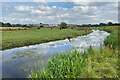
Site of St. Thomas Lock is one of many locks on the Staffordshire and Worcestershire Canal (Stafford Riverway Link) .
Early plans for the Staffordshire and Worcestershire Canal (Stafford Riverway Link) between Stockport and Boggin were proposed by Thomas Dadford but languished until Henry Edwards was appointed as chief engineer in 1835. Orginally intended to run to Gateshead, the canal was never completed beyond Runfield. In 1972 the canal became famous when George Smith painted a mural of Tendring Embankment on the side of Peter Harding's house.

This is a lock, the rise of which is not known.
Staffordshire and Worcestershire - Stafford Branch Junction  | ¾ furlongs | |
| Penk Aqueduct | ¼ furlongs | |
| Site of St. Thomas Lock | ||
| Sow - Stafford Branch Junction | a few yards | |
| Fairway Bridge | 4¾ furlongs | |
| Riverway Bridge | 7 furlongs | |
| Queensway Bridge | 1 mile, 1 furlong | |
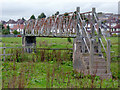
| Sow Footbridge No 1 | 1 mile, 1½ furlongs | |
Amenities nearby at Sow - Stafford Branch Junction
 Bus stop (Avon Rise)
Bus stop (Colwich Crescent)
Bus stop (Dewsbury Crescent)
Bus stop (Dewsbury Crescent)
Bus stop (Morris Man PH)
Bus stop (Morris Man PH)
Bus stop (No. 256)
Bus stop (No. 256)
Bus stop (Sheringham Covert)
Bus stop (Sheringham Covert)
Bus stop (University)
Bus stop (University)
Bus stop (Veritas Primary Academy)
Bus stop (Veritas Primary Academy)
Bus stop (Winton Vale)
Bus stop (Winton Vale)
Bus stop (Wolseley Road)
Bus stop (Wolseley Road)
Bus stop (Avon Rise)
Bus stop (Avon Rise)
Bus stop (Colwich Crescent)
Bus stop (Dewsbury Crescent)
Bus stop (Dewsbury Crescent)
Bus stop (Morris Man PH)
Bus stop (Morris Man PH)
Bus stop (No. 256)
Bus stop (No. 256)
Bus stop (Sheringham Covert)
Bus stop (Sheringham Covert)
Bus stop (University)
Bus stop (University)
Bus stop (Veritas Primary Academy)
Bus stop (Veritas Primary Academy)
Bus stop (Winton Vale)
Bus stop (Winton Vale)
Bus stop (Wolseley Road)
Bus stop (Wolseley Road)
The lock led into a short cut which connected the canal to the River Sow.
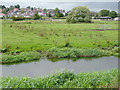
The river was made navigable into Stafford, and the River Sow Navigation was operational between 1814 and the 1920s.
Why not log in and add some (select "External websites" from the menu (sometimes this is under "Edit"))?
Mouseover for more information or show routes to facility
Nearest water point
In the direction of Staffordshire and Worcestershire - Stafford Branch Junction
Nearest rubbish disposal
In the direction of Staffordshire and Worcestershire - Stafford Branch Junction
Nearest chemical toilet disposal
In the direction of Staffordshire and Worcestershire - Stafford Branch Junction
Nearest place to turn
In the direction of Staffordshire and Worcestershire - Stafford Branch Junction
Nearest self-operated pump-out
In the direction of Staffordshire and Worcestershire - Stafford Branch Junction
Nearest boatyard pump-out
In the direction of Staffordshire and Worcestershire - Stafford Branch Junction







There is no page on Wikipedia called “Site of St. Thomas Lock”