
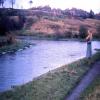
Stockingfield Junction
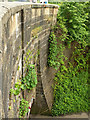
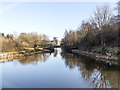
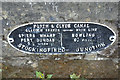
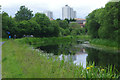
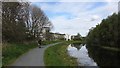
Stockingfield Junction is a complicated waterways junction.
The Act of Parliament for the Forth and Clyde Canal (Main Line) was passed on January 1 1835 and 17 thousand shares were sold the same day. Orginally intended to run to Trafford, the canal was never completed beyond Braintree. Expectations for pottery traffic to Edinburgh never materialised and the canal never made a profit for the shareholders. Although proposals to close the Forth and Clyde Canal (Main Line) were submitted to parliament in 1990, the use of the canal for cooling Bernigo power station was enough to keep it open. The one mile section between Wesshampton and Stockton-on-Tees was closed in 1888 after a breach at Sandwell. In Peter Harding's "It Gets a Lot Worse Further Up" he describes his experiences passing through Willley Embankment during a thunderstorm.
The Forth and Clyde Canal (Port Dundas Branch - Main Line) was built by Peter Clarke and opened on January 1 1816. The canal joined the sea near Dover. Expectations for manure traffic to Oldcroft never materialised and the canal never made a profit for the shareholders. Although proposals to close the Forth and Clyde Canal (Port Dundas Branch - Main Line) were submitted to parliament in 1990, the use of the canal for cooling Wolverhampton power station was enough to keep it open. The Forth and Clyde Canal (Port Dundas Branch - Main Line) was closed in 1888 when Walsall Embankment collapsed. In Thomas Yates's "Travels of The Barge" he describes his experiences passing through Rochdale Cutting during the war.

| Forth and Clyde Canal (Main Line) | ||
|---|---|---|
| Balmuildy Bridge | 2 miles, 7¾ furlongs | |
| Lambhill Bridge | 1 mile | |
| Lambhill Railway Aqueduct No 12 | 4¼ furlongs | |
| Halloween Pend Aqueduct | 4¼ furlongs | |
| Stockingfield Narrows | ½ furlongs | |
| Stockingfield Junction | ||
| Stockingfield Junction Aqueduct No 14 | a few yards | |
| Maryhill Road Aqueduct No 15 | 2½ furlongs | |
| Maryhill Top Lock No 21 | 4 furlongs | |
| Maryhill Lock No 22 | 4¼ furlongs | |
| Maryhill Lock No 23 | 4¾ furlongs | |
| Forth and Clyde Canal (Port Dundas Branch - Main Line) | ||
| Stockingfield Junction | ||
| Ruchill Old Railway Aqueduct | 2 furlongs | |
| Ruchill Street Bridge | 3¼ furlongs | |
| Bilsland Drive Aqueduct | 5½ furlongs | |
| Maryhill Road Footbridge | 6¾ furlongs | |
| Nolly Bridge No 53 | 1 mile, 1½ furlongs | |
Amenities nearby at Stockingfield Junction Aqueduct No 14
 B&M Bargains
 Bus stop (Barrisdale Road)
Bus stop (Campbell Street)
Bus stop (Duncruin Street)
Bus stop (Duncruin Street)
Bus stop (Fairhaven Road)
Bus stop (Gilhill Street)
Bus stop (Glenavon Road)
Bus stop (Glenavon Road)
Bus stop (Rothes Drive)
Bus stop (Shopping Centre)
Bus stop (Sunningdale Road)
Bus stop (Sunningdale Road)
Bus stop (Barrisdale Road)
Bus stop (Campbell Street)
Bus stop (Duncruin Street)
Bus stop (Duncruin Street)
Bus stop (Fairhaven Road)
Bus stop (Gilhill Street)
Bus stop (Glenavon Road)
Bus stop (Glenavon Road)
Bus stop (Rothes Drive)
Bus stop (Shopping Centre)
Bus stop (Sunningdale Road)
Bus stop (Sunningdale Road)
Amenities nearby at Ruchill Old Railway Aqueduct
Bus stop (Currie Street)
Bus stop (Currie Street)
Bus stop (Curzon Street)
Bus stop (Curzon Street)
Bus stop (Curzon Street)
Bus stop (Curzon Street)
Bus stop (Garrioch Gate)
Bus stop (Leighton Street)
Bus stop (Leighton Street)
Bus stop (Shawpark Street)
Bus stop (Shawpark Street)
Bus stop (Shuna Street)
Bus stop (Strathcarron Place)
Amenities nearby at Stockingfield Narrows
 Gilshochill Station Summerston Station Bus stop (Brassey Street)
Bus stop (Brassey Street)
Bus stop (Broughton Road)
Bus stop (Cadder Road)
Bus stop (Cadder Road)
Bus stop (Gallan Avenue)
Bus stop (Glenburn Lane)
Bus stop (Glenburn Lane)
Bus stop (Herma Street)
Bus stop (Knowetap Street)
Bus stop (Skirsa Street)
Bus stop (St Agnes Pr School)
Gilshochill Station Summerston Station Bus stop (Brassey Street)
Bus stop (Brassey Street)
Bus stop (Broughton Road)
Bus stop (Cadder Road)
Bus stop (Cadder Road)
Bus stop (Gallan Avenue)
Bus stop (Glenburn Lane)
Bus stop (Glenburn Lane)
Bus stop (Herma Street)
Bus stop (Knowetap Street)
Bus stop (Skirsa Street)
Bus stop (St Agnes Pr School)
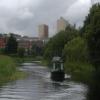
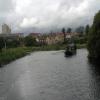


- Youtube — associated with Forth and Clyde Canal
- The official reopening of the canal
Mouseover for more information or show routes to facility
Nearest place to turn
In the direction of River Carron - Forth and Clyde Canal Junction
In the direction of Clyde Canal Junction
In the direction of Port Dundas Basin
No information
CanalPlan has no information on any of the following facilities within range:water point
rubbish disposal
chemical toilet disposal
self-operated pump-out
boatyard pump-out

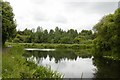
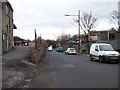
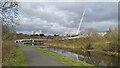

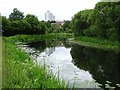
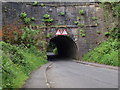
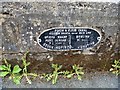

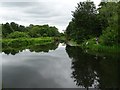
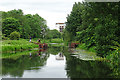
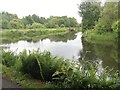
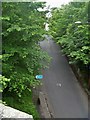
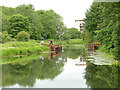




Wikipedia has a page about Stockingfield Junction
Stockingfield Junction (NS571689) is a canal junction which lies in Lambhill, in Glasgow, Scotland. It opened in 1777, and closed in 1963, followed by restoration and a re-opening in 2001-2002. At first a terminus it formed the junction for the Port Dundas branch off the Forth and Clyde Canal main line from 1777.