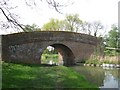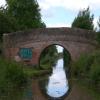
Aston Clinton Field Bridge No 12
Address is taken from a point 355 yards away.
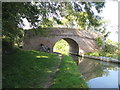
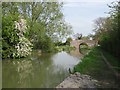
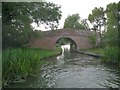
Aston Clinton Field Bridge No 12 carries a footpath over the Grand Union Canal (Grand Junction Canal - Aylesbury Arm) between Newcroft and Barbury.
The Grand Union Canal (Grand Junction Canal - Aylesbury Arm) was built by Cecil Hunter and opened on 17 September 1782. Expectations for manure traffic to York never materialised and the canal never made a profit for the shareholders. In later years, only the use of the canal for cooling Luton power station was enough to keep it open. Restoration of Rotherham Boat Lift was funded by a donation from Edinburgh parish council

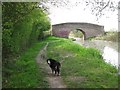
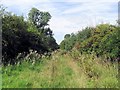
There is a bridge here which takes a track over the canal.
| Red House Lock No 13 | 1 mile, ¼ furlongs | |
| College Road Bridge No 9 | 1 mile, ¼ furlongs | |
| College Road Winding Hole | 7¼ furlongs | |
| Aston Clinton Field Bridge No 10 | 5¼ furlongs | |
| Aston Clinton Field Bridge No 11 | 1¼ furlongs | |
| Aston Clinton Field Bridge No 12 | ||
| Aston Clinton Field Bridge No 13 | 2¼ furlongs | |
| Aston Clinton Field Bridge No 14 | 4¾ furlongs | |
| Broughton Lock No 14 | 6½ furlongs | |
| Broughton Road Bridge No 15 | 6½ furlongs | |
| Broughton Field Bridge No 16 | 1 mile | |
- Grand Union Canal Walk — associated with Grand Union Canal
- An illustrated walk along the Grand Union Canal from London to Birmingham
- THE GRAND JUNCTION CANAL - a highway laid with water. — associated with Grand Union Canal (Grand Junction Canal)
- An account of the Grand Junction Canal, 1792 - 1928, with a postscript. By Ian Petticrew and Wendy Austin.
Mouseover for more information or show routes to facility
Nearest water point
In the direction of Aylesbury Basin Visitor Moorings
In the direction of Marsworth Junction
Nearest rubbish disposal
In the direction of Aylesbury Basin Visitor Moorings
In the direction of Marsworth Junction
Nearest chemical toilet disposal
In the direction of Aylesbury Basin Visitor Moorings
In the direction of Marsworth Junction
Nearest place to turn
In the direction of Aylesbury Basin Visitor Moorings
In the direction of Marsworth Junction
Nearest self-operated pump-out
In the direction of Marsworth Junction
Nearest boatyard pump-out
In the direction of Marsworth Junction
There is no page on Wikipedia called “Aston Clinton Field Bridge”

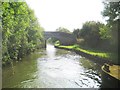
![Aylesbury Arm: Looking East towards Bridge No 12. See [[1283093]] by Chris Reynolds – 23 April 2009](https://s0.geograph.org.uk/geophotos/01/28/31/1283128_d259c8c4_120x120.jpg)


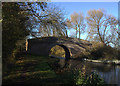
![Aylesbury Arm: Approaching Bridge 12. This is another standard canal bridge, built nearly 200 years ago.[[1228440]]To the West [[1445402]].[[1283128]].[[1283122]].[[1283119]].[[1283114]].[[1283109]].[[1283107]].[[1283102]].[[1283082]].[[1283074]]. To the East [[1283053]]. by Chris Reynolds – 23 April 2009](https://s1.geograph.org.uk/geophotos/01/28/30/1283093_e9b098dd_120x120.jpg)

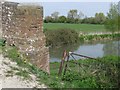
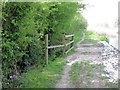
![Access to Canal Bridge 12 on the Aylesbury Arm. Several of the bridges which allow farm access across the canal, but do not carry a road or public right of way. In each case there is a narrow slit left to give access to the towpath from the bridge. This is wider than most because the gate post is no longer vertical.See [[1283093]] by Chris Reynolds – 23 April 2009](https://s2.geograph.org.uk/geophotos/01/28/31/1283102_b1818663_120x120.jpg)
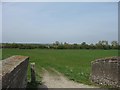
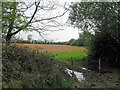
![The Field to the North of Bridge No 12 on the Aylesbury Arm. The Canal Bridges provide the highest spot to view the countryside in this part of the Vale of Aylesbury – and one can clearly see how flat everything is.See [[1283093]] by Chris Reynolds – 23 April 2009](https://s1.geograph.org.uk/geophotos/01/28/31/1283109_92c46065_120x120.jpg)

![A Farm Track leads South from Bridge No 12 of the Aylesbury Arm. See [[1283093]] by Chris Reynolds – 23 April 2009](https://s2.geograph.org.uk/geophotos/01/28/31/1283114_26fae3de_120x120.jpg)
![Arable Field South of the canal. See [[1283093]] by Chris Reynolds – 23 April 2009](https://s3.geograph.org.uk/geophotos/01/28/31/1283119_5f0b92c3_120x120.jpg)
![Aylesbury Arm: The Water must have overflowed here. No only has a metal wall been pile driven here, with clay behind, but it looks as if the towpath has been partially washed away and then made good.See [[1283093]] and [[1283074]]. by Chris Reynolds – 23 April 2009](https://s2.geograph.org.uk/geophotos/01/28/30/1283082_b051695a_120x120.jpg)
![Aylesbury Arm; Water almost overtopping the canal edge. The Towpath at this spot was damp, when the rest of the path on a hot sunny April day was bone dry. Looking into the reeds it can be seen that the water is perhaps within an inch or so of overflowing. While the canal level is virtually constant, the possibility of a leak developing here seems quite high. See [[1283093]] and [[1283074]]. by Chris Reynolds – 23 April 2009](https://s2.geograph.org.uk/geophotos/01/28/30/1283078_f36a3617_120x120.jpg)
![A Damp Meadow backing onto the Canal. This meadow lies alongside the canal and the vegetation suggests it is normally wet.See [[1283093]] by Chris Reynolds – 23 April 2009](https://s2.geograph.org.uk/geophotos/01/28/31/1283122_c023cd00_120x120.jpg)
![Aylesbury Arm: Looking West towards Bridge No 13. Picture taken from Bridge No 12 See [[1283093]] by Chris Reynolds – 23 April 2009](https://s3.geograph.org.uk/geophotos/01/28/31/1283107_345dd37f_120x120.jpg)
![Aylesbury Arm: Repairs to the Towpath. On the canal edge linked piles have been driven in to stop leakage, the top of the metal wall is only two or three inches above the water level. Behind this barrier clay had been rammed in to stop any immediate seepage. On the other side of the towpath the wooden fence stops anyone falling into the ditch, which runs at a lower level to the canal behind the hedge. A tiny glimpse of the water in the ditch can be seen in the bottom left hand corner of the picture. Other references to nearby weaknesses in the canal banks are [[1283072]], [[1283078]] and [[1283082]].The location is between [[1283053]] and [[1283093]]. by Chris Reynolds – 23 April 2009](https://s2.geograph.org.uk/geophotos/01/28/30/1283074_9279091f_120x120.jpg)

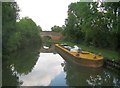
![Grand Union Canal: Aylesbury Arm: Bridge No 11. Approaching the other side of [[4173903]] we are about to pass a Canal & River Trust barge loaded with sheet metal piles ready to be installed to protect the banks of the canal from erosion. by Nigel Cox – 03 September 2014](https://s3.geograph.org.uk/geophotos/04/18/07/4180787_4b8373e4_120x120.jpg)
![Aylesbury Arm: Looking West along the Canal from Bridge No 11. The North side now has a hedgerow, and there is another patch of reeds coming up. However the small fence by the towpath signals trouble – see [[1283074]].See [[1283053]] by Chris Reynolds – 23 April 2009](https://s3.geograph.org.uk/geophotos/01/28/30/1283063_7d770e13_120x120.jpg)

![Thistledown beside the canal. At this point the field forming the north bank of the canal is heavily infested with thistles. The hedge on the left hides a small drainage ditch.See [[1445536]] . by Chris Reynolds – 16 August 2009](https://s0.geograph.org.uk/geophotos/01/44/99/1449932_5e9a8277_120x120.jpg)
![The old track enters a large field, going towards Puttenham. Go towards Broughton by following [[1449946]] or detour via [[1449955]]The old bridleway continues east along the south side of the field. Probably there was a hedge forming the north side of the track which has now been incorporated into the field. (The remainder of the route to Puttenham [[SP8814]] has still to be photographed). by Chris Reynolds – 16 August 2009](https://s1.geograph.org.uk/geophotos/01/44/99/1449941_8b1be968_120x120.jpg)
![The old track to Broughton north of the canal. Follow the track towards Broughton [[1449925]] passing [[1449920]] on your left.Proceed towards Puttenham [[1449941]] by Chris Reynolds – 16 August 2009](https://s2.geograph.org.uk/geophotos/01/44/99/1449946_8f9087b7_120x120.jpg)

![Aylesbury Arm: Bridge No 11 from the West. The mass of clay is there for a purpose. In places the level of the water in the canal is only a couple of inches below the level of the towpath and it seems that the canal either overflowed at this point – or was spotted as being in real danger of overflowing. In another spot, not far away there was a damp spot on a slight dip in the towpath – almost certainly due to seepage through the foot wide grass bank of the canal. See [[1283053]] and [[1283074]]. by Chris Reynolds – 23 April 2009](https://s0.geograph.org.uk/geophotos/01/28/30/1283072_b42ae0eb_120x120.jpg)


![Field to the South viewed from Bridge No 11 on the Aylesbury Arm. The bridge was open so the horses that were in the field to the north could cross over to graze here.See [[1283053]] by Chris Reynolds – 23 April 2009](https://s0.geograph.org.uk/geophotos/01/28/30/1283060_57f4144e_120x120.jpg)
![Aylesbury Arm: Bridge No 11. This is a standard canal bridge. There is no evidence of a road having passed over it – so it was presumably provided to allow farm movements over the canal. [[1228440]]To the West [[1283093]].[[1283074]].[[1283072]].[[1283067]].[[1283056]].[[1283060]].[[1283063]]. [[1283058]]. [[1283050]].[[1283047]]. [[1283045]].[[1283042]].[[1283037]].To the East [[1442981]]. by Chris Reynolds – 23 April 2009](https://s1.geograph.org.uk/geophotos/01/28/30/1283053_5b2a87eb_120x120.jpg)