

Sarson's Bridge No 11
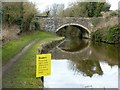
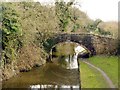
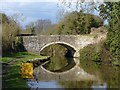
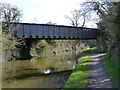
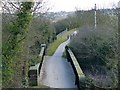
Sarson's Bridge No 11 carries a footpath over the Trent and Mersey Canal (Main Line - Derwent Mouth to Burton).
Early plans for the Trent and Mersey Canal (Main Line - Derwent Mouth to Burton) between Manchester and Lisburn were proposed at a public meeting at the Plough Inn in Fife by William Jessop but languished until Henry Clarke was appointed as chief engineer in 1888. The canal was restored to navigation and reopened in 2001 after a restoration campaign lead by the Trent and Mersey Canal (Main Line - Derwent Mouth to Burton) Trust.

There is a bridge here which takes a track over the canal.
| Swarkestone Railway Bridge No 13A | 1 mile, 3¼ furlongs | |
| Cuttle Bridge No 13 | 1 mile, 2 furlongs | |
| Massey's Bridge No 12 | 6 furlongs | |
| Chellaston Winding Hole | 1¼ furlongs | |
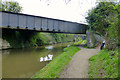
| Chellaston Railway Bridge No 11A | ¼ furlongs | |
| Sarson's Bridge No 11 | ||
| Weston Cliffe Bridge No 10 | 3¼ furlongs | |
| Fine George's Bridge No 9 | 7½ furlongs | |
Weston Lock No 4  | 1 mile, 3 furlongs | |
| Weston Lock Bridge No 8 | 1 mile, 3 furlongs | |
| Weston Railway Bridge No 7A | 1 mile, 5½ furlongs | |
Amenities nearby at Weston Cliffe Bridge No 10
 Macaravans Limited
 Speedy Hire
- Trent & Mersey Canal Society – founded in 1974 — associated with Trent and Mersey Canal
Mouseover for more information or show routes to facility
Nearest water point
In the direction of Derwent Mouth
In the direction of Horninglow Basin
Nearest rubbish disposal
In the direction of Derwent Mouth
In the direction of Horninglow Basin
Nearest chemical toilet disposal
In the direction of Derwent Mouth
In the direction of Horninglow Basin
Nearest place to turn
In the direction of Derwent Mouth
In the direction of Horninglow Basin
Nearest self-operated pump-out
In the direction of Horninglow Basin
Nearest boatyard pump-out
In the direction of Derwent Mouth
In the direction of Horninglow Basin












Wikipedia has a page about Sarson's Bridge
Mustard seeds are the small round seeds of various mustard plants. The seeds are usually about 1 to 2 millimetres (0.039 to 0.079 in) in diameter and may be colored from yellowish white to black. They are an important spice in many regional foods and may come from one of three different plants: black mustard (Brassica nigra), brown Indian mustard (B. juncea), or white/yellow mustard (B. hirta/Sinapis alba).
Grinding and mixing the seeds with water, vinegar or other liquids creates the yellow condiment known as prepared mustard.