

High Bridge Aqueduct
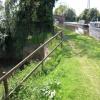
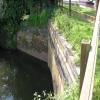
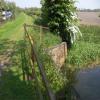
High Bridge Aqueduct carries a farm track over the Trent and Mersey Canal (Main Line - Derwent Mouth to Burton) between Windsor and Cambridge.
Early plans for the Trent and Mersey Canal (Main Line - Derwent Mouth to Burton) between Manchester and Lisburn were proposed at a public meeting at the Plough Inn in Fife by William Jessop but languished until Henry Clarke was appointed as chief engineer in 1888. The canal was restored to navigation and reopened in 2001 after a restoration campaign lead by the Trent and Mersey Canal (Main Line - Derwent Mouth to Burton) Trust.

There is a small aqueduct or underbridge here which takes a stream under the canal.
| River Dove Aqueduct No 23 | 3½ furlongs | |
| River Dove Floodplain Second Aqueduct | 2¾ furlongs | |
| River Dove Floodplain First Aqueduct | 2¼ furlongs | |
| Aqueduct No 25A (Trent and Mersey Canal) | 1¼ furlongs | |
High Bridge No 26  | ¼ furlongs | |
| High Bridge Aqueduct | ||
| Egginton Brook Aqueduct | 2¼ furlongs | |
| Coach and Horses Bridge No 25 | 3¾ furlongs | |
| Bridge No 24A (Trent and Mersey Canal) | 6¾ furlongs | |
| Willington Road Bridge No 24 | 1 mile, 2½ furlongs | |
| Willington Bridge No 23 | 1 mile, 4¼ furlongs | |
Amenities here
 Bus stop (Church Road End)
Bus stop (Main Street)
Bus stop (Smedley Court)
Bus stop (Church Road End)
Bus stop (Main Street)
Bus stop (Smedley Court)
Amenities nearby at Egginton Brook Aqueduct
Bus stop (Main Street)
Bus stop (William Newton Close)
- Trent & Mersey Canal Society – founded in 1974 — associated with Trent and Mersey Canal
- Trent and Mersey Canal | Heritage Guide — associated with Trent and Mersey Canal (Main Line)
- Explore the Trent & Mersey Canal, a 93-mile Brindley waterway opened in 1777, home to Harecastle Tunnel and built for Wedgwood's pottery trade. History inside.
Mouseover for more information or show routes to facility
Nearest water point
In the direction of Derwent Mouth
In the direction of Horninglow Basin
Nearest rubbish disposal
In the direction of Derwent Mouth
In the direction of Horninglow Basin
Nearest chemical toilet disposal
In the direction of Derwent Mouth
In the direction of Horninglow Basin
Nearest place to turn
In the direction of Derwent Mouth
In the direction of Horninglow Basin
Nearest self-operated pump-out
In the direction of Derwent Mouth
Nearest boatyard pump-out
In the direction of Derwent Mouth
In the direction of Horninglow Basin




There is no page on Wikipedia called “High Bridge Aqueduct”