
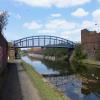
Bedford Place Footbridge No L
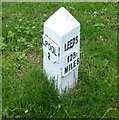
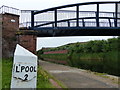
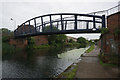
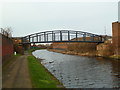
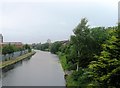
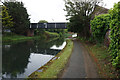
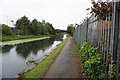
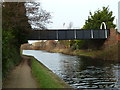
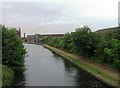
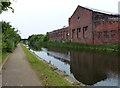
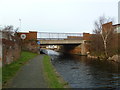
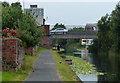
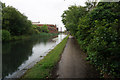
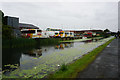
Bedford Place Footbridge No L carries a footpath over the Leeds and Liverpool Canal (Main Line - Liverpool to Wigan).
Early plans of what would become the Leeds and Liverpool Canal (Main Line - Liverpool to Wigan) were drawn up by John Smeaton in 1876 but problems with Swansea Tunnel caused delays and it was finally opened on 17 September 1782. In 1955 the Conway and Rhondda Canal built a branch to join at Nantwich. The four mile section between Southton and Northcorn was closed in 1888 after a breach at Eastworth. "1000 Miles on The Inland Waterways" by Henry Harding describes an early passage through the waterway, especially that of Ambersford Aqueduct.

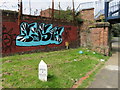
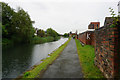
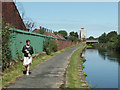
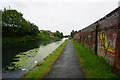
There is a bridge here which takes pedestrian traffic over the canal.
| Bank Hall Railway Bridge No H | 4¾ furlongs | |
| Bank Hall Aqueduct No 2 | 3 furlongs | |
| Bank Hall Station Bridge No I | 2¾ furlongs | |
| Brasenose Road Aqueduct No 3 | 1½ furlongs | |
| Ceres Street Bridge No K | 1 furlong | |
| Bedford Place Footbridge No L | ||
| Miller's Bridge Roadbridge No M | 1¾ furlongs | |
| Everton View Footbridge No Ma | 2¾ furlongs | |
| Tattershall Place Aqueduct No 4 | 2¾ furlongs | |
| Coffee House Bridge No O | 4¼ furlongs | |
| Lancs & Yorks Railway Bridge No P | 4¾ furlongs | |
Amenities here
 Bootle Diy
 Bus stop (Beatrice Street)
Bus stop (Bedford Place)
Bus stop (Cargill Works)
Bus stop (Keble Road)
Bus stop (Lodwick Street)
Bus stop (Beatrice Street)
Bus stop (Bedford Place)
Bus stop (Cargill Works)
Bus stop (Keble Road)
Bus stop (Lodwick Street)
Amenities nearby at Miller's Bridge Roadbridge No M
 Speedy Hire Bus stop (Balliol Road)
Bus stop (Derby Road)
Bus stop (Douglas Place)
Bus stop (Hugh Baird College)
Bus stop (Marble Close)
Bus stop (Millers Bridge)
Bus stop (Oriel Road)
Speedy Hire Bus stop (Balliol Road)
Bus stop (Derby Road)
Bus stop (Douglas Place)
Bus stop (Hugh Baird College)
Bus stop (Marble Close)
Bus stop (Millers Bridge)
Bus stop (Oriel Road)
Amenities nearby at Ceres Street Bridge No K
Budget Bottle Gas M-F 5.30pm (Sa Su Ring) Texaco Bus stop (Bedford Road)
Why not log in and add some (select "External websites" from the menu (sometimes this is under "Edit"))?
Mouseover for more information or show routes to facility
Nearest water point
In the direction of Wigan Junction
In the direction of Eldonian Village
Nearest rubbish disposal
In the direction of Wigan Junction
In the direction of Eldonian Village
Nearest chemical toilet disposal
In the direction of Wigan Junction
In the direction of Eldonian Village
Nearest place to turn
In the direction of Wigan Junction
In the direction of Eldonian Village
Nearest self-operated pump-out
In the direction of Wigan Junction
In the direction of Eldonian Village
Nearest boatyard pump-out
In the direction of Wigan Junction





There is no page on Wikipedia called “Bedford Place Footbridge No L”