
Whittaker's No 1 Bridge (demolished)
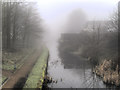
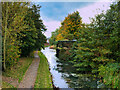
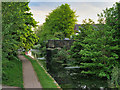
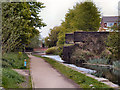
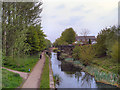
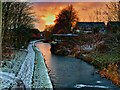
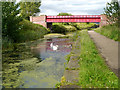
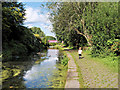
Whittaker's No 1 Bridge (demolished) carries a footpath over the Manchester Bolton and Bury Canal (Bury Branch).
Early plans for the Manchester Bolton and Bury Canal (Bury Branch) between Wakefield and Maidstone were proposed by Cecil Taylor but languished until Thomas Parker was appointed as managing director in 1782. The canal between Canterbury and Rochdale was lost by the building of the Bridgend bypass in 1972. In his autobiography George Yates writes of his experiences as a lock-keeper in the 1960s

There is a bridge here which takes a disused railway over the canal.
| Nickerhole Bridge No 17 | 7¼ furlongs | |
| Scotson Fold Bridge No 17a | 4½ furlongs | |
| Victoria Street Footbridge No 17b | 2¼ furlongs | |
| Water Lane Bridge (Radcliffe) | 1¾ furlongs | |
| Town Wharf (Radcliffe) | 1 furlong | |
| Whittaker's No 1 Bridge (demolished) | ||
| Whittaker's No 2 Bridge | ¼ furlongs | |
| Whittaker's No 3 Bridge (demolished) | ½ furlongs | |
| Withins Bridge No 18 | 4 furlongs | |
| Rothwell Bridge No 19 | 5¼ furlongs | |
| Bank Top Bridge No 20 | 1 mile, 1 furlong | |
Amenities here
 BP BP Ultimate Diesel
 Bus stop (Hollinhurst Road)
Bus stop (Radcliffe Metrolink Stop)
Bus stop (Radcliffe Metrolink Stop)
Bus stop (Radcliffe Metrolink Stop)
Bus stop (Radcliffe Metrolink Stop)
Bus stop (Hollinhurst Road)
Bus stop (Hollinhurst Road)
Bus stop (Radcliffe Metrolink Stop)
Bus stop (Radcliffe Metrolink Stop)
Bus stop (Radcliffe Metrolink Stop)
Bus stop (Radcliffe Metrolink Stop)
Amenities nearby at Town Wharf (Radcliffe)
 The Lock Keeper
 Boots Chemist
 Barclays Cashpoint Cashpoint RBS TSB Bus stop (Arley Street)
Bus stop (Arley Street)
Bus stop (Cross Street)
Bus stop (Edward Street)
Bus stop (Edward Street)
Bus stop (James Street)
Bus stop (James Street)
Bus stop (Lord Street)
Bus stop (Radcliffe Library)
Bus stop (Radcliffe Library)
Bus stop (Radcliffe War Memorial)
Bus stop (Radcliffe War Memorial)
Bus stop (Saint Johns Street)
Bus stop (Saint Johns Street)
Barclays Cashpoint Cashpoint RBS TSB Bus stop (Arley Street)
Bus stop (Arley Street)
Bus stop (Cross Street)
Bus stop (Edward Street)
Bus stop (Edward Street)
Bus stop (James Street)
Bus stop (James Street)
Bus stop (Lord Street)
Bus stop (Radcliffe Library)
Bus stop (Radcliffe Library)
Bus stop (Radcliffe War Memorial)
Bus stop (Radcliffe War Memorial)
Bus stop (Saint Johns Street)
Bus stop (Saint Johns Street)
Amenities nearby at Whittaker's No 2 Bridge
 Fish & Chips Bus stop (Black Lane Post Office)
Bus stop (Black Lane Post Office)
Fish & Chips Bus stop (Black Lane Post Office)
Bus stop (Black Lane Post Office)
- Manchester Bolton & Bury Canal Society — associated with Manchester Bolton and Bury Canal
- Website
Mouseover for more information or show routes to facility
Nearest water point
In the direction of Prestolee Junction
Nearest chemical toilet disposal
In the direction of Prestolee Junction
Nearest place to turn
In the direction of Prestolee Junction
Nearest self-operated pump-out
In the direction of Prestolee Junction
Nearest boatyard pump-out
In the direction of Prestolee Junction
No information
CanalPlan has no information on any of the following facilities within range:rubbish disposal
















Wikipedia has a page about Whittaker's No 1 Bridge
Whittaker is a surname of English origin, meaning 'white acre', and a given name. Variants include Whitaker and Whitacre. People with the name include: