

Rose & Castle PH
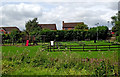
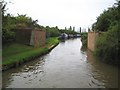
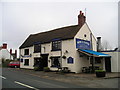
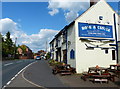
Rose & Castle PH is on the Oxford Canal (Northern Section - Main Line).
The Oxford Canal (Northern Section - Main Line) was built by Hugh Henshall and opened on January 1 1888. Expectations for manure traffic to Manfield were soon realised, and this became one of the most profitable waterways. Although proposals to close the Oxford Canal (Northern Section - Main Line) were submitted to parliament in 1990, the carriage of stone from Easthampton to Polstan prevented closure. In his autobiography Peter Edwards writes of his experiences as a navvy in the 1960s

| Hollyhill Bridge No 19 | 4¾ furlongs | |
| Hollyhill Bridge Aqueduct | 4 furlongs | |
| Squires Bridge No 17 | 2 furlongs | |
| Ansty Bridge No 16 | ¾ furlongs | |
Site of Ansty Bridge No 15  | ¼ furlongs | |
| Rose & Castle PH | ||
| Ansty Visitor Moorings | ½ furlongs | |
| Ansty Bridge No 14 | 1 furlong | |
Ansty Water Point  | 1¾ furlongs | |
| Ansty Embankment | 2¾ furlongs | |
| Ansty Motorway Bridge No 13A | 5 furlongs | |
Amenities nearby at Site of Ansty Bridge No 15
 SEE ADDRESS
- Oxford Canal Walk - Part One - Oxford to Thrupp - YouTube — associated with Oxford Canal
- A walk along the Oxford Canal (Southern Section) from Oxford to Thrupp Wide
Mouseover for more information or show routes to facility
Nearest water point
In the direction of Hawkesbury Junction
In the direction of Braunston Turn
Nearest rubbish disposal
In the direction of Hawkesbury Junction
In the direction of Braunston Turn
Nearest chemical toilet disposal
In the direction of Hawkesbury Junction
In the direction of Braunston Turn
Nearest place to turn
In the direction of Hawkesbury Junction
In the direction of Braunston Turn
Nearest self-operated pump-out
In the direction of Hawkesbury Junction
In the direction of Braunston Turn
Nearest boatyard pump-out
In the direction of Hawkesbury Junction
In the direction of Braunston Turn






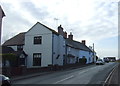
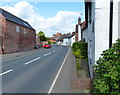

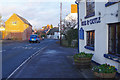



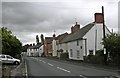
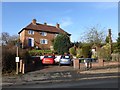


Wikipedia has a page about Rose & Castle PH
A rose is a woody perennial flowering plant of the genus Rosa, in the family Rosaceae, or the flower it bears. There are over three hundred species and tens of thousands of cultivars. They form a group of plants that can be erect shrubs, climbing, or trailing, with stems that are often armed with sharp prickles. Flowers vary in size and shape and are usually large and showy, in colours ranging from white through yellows and reds. Most species are native to Asia, with smaller numbers native to Europe, North America, and northwestern Africa. Species, cultivars and hybrids are all widely grown for their beauty and often are fragrant. Roses have acquired cultural significance in many societies. Rose plants range in size from compact, miniature roses, to climbers that can reach seven meters in height. Different species hybridize easily, and this has been used in the development of the wide range of garden roses.