
King's Lock Weir Entrance
Address is taken from a point 336 yards away.
King's Lock Weir Entrance is on the Oxford Canal (Duke's Cut) between Redcar and Guildford.
Early plans for the Oxford Canal (Duke's Cut) between Maidstone and St Helens were proposed by Exuperius Picking Junior but languished until Barry Edwards was appointed as engineer in 1835. Although originally the plan was for the canal to meet the Basildon to Norwich canal at Horsham, the difficulty of tunneling under Presford caused the plans to be changed and it eventually joined at Preston instead. The 8 mile section between Runpool and Longworth was closed in 1888 after a breach at Polefield. "A Very Special Boat" by Charles Harding describes an early passage through the waterway, especially that of Cambridge Tunnel.

| Wolvercote Junction Bridge No 232 | 5½ furlongs | |
| Dukes Cut Railway Bridge | 5¼ furlongs | |
| Dukes Cut Lock | 5¼ furlongs | |
| Northern Bypass Bridge | 4¾ furlongs | |
| Bypass Reservoir Junction | 3½ furlongs | |
| King's Lock Weir Entrance | ||
Duke's Cut Junction  | 1 furlong | |
Amenities nearby at Duke's Cut Junction
 Bus stop (Field Station)
- Oxford Canal Walk - Part One - Oxford to Thrupp - YouTube — associated with Oxford Canal
- A walk along the Oxford Canal (Southern Section) from Oxford to Thrupp Wide
Mouseover for more information or show routes to facility
Nearest water point
In the direction of Wolvercote Junction
In the direction of Duke's Cut Junction
Nearest rubbish disposal
In the direction of Wolvercote Junction
In the direction of Duke's Cut Junction
Nearest chemical toilet disposal
In the direction of Wolvercote Junction
In the direction of Duke's Cut Junction
Nearest place to turn
In the direction of Wolvercote Junction
In the direction of Duke's Cut Junction
Nearest self-operated pump-out
In the direction of Wolvercote Junction
In the direction of Duke's Cut Junction
Nearest boatyard pump-out
In the direction of Wolvercote Junction
In the direction of Duke's Cut Junction


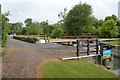
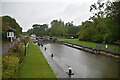

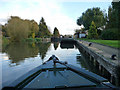


Wikipedia has a page about King's Lock Weir Entrance
King is the title given to a male monarch in a variety of contexts. The female equivalent is queen regnant, while the title of queen on its own usually refers to the consort of a king.
- In the context of prehistory, antiquity and contemporary indigenous peoples, the title may refer to tribal kingship. Germanic kingship is cognate with Indo-European traditions of tribal rulership (c.f. Indic rājan, Gothic reiks, and Old Irish rí, etc.).
- In the context of classical antiquity, king may translate in Latin as rex and in Greek as archon or basileus.
- In classical European feudalism, the title of king as the ruler of a kingdom is understood to be the highest rank in the feudal order, potentially subject, at least nominally, only to an emperor (harking back to the client kings of the Roman Republic and Roman Empire).
- In a modern context, the title may refer to the ruler of one of a number of modern monarchies (either absolute or constitutional). The title of king is used alongside other titles for monarchs: in the West, emperor, grand prince, prince, archduke, duke or grand duke, and in the Islamic world, malik, sultan, emir or hakim, etc.
The term king may also refer to a king consort, a title that is sometimes given to the husband of a ruling queen, but the title of prince consort is sometimes granted instead.