

Daventry Development Link Road Bridge No 23A
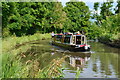
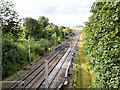
Daventry Development Link Road Bridge No 23A carries a footpath over the Grand Union Canal (Grand Junction Canal - Main Line - Norton to Gayton) near to Newford Embankment.
The Act of Parliament for the Grand Union Canal (Grand Junction Canal - Main Line - Norton to Gayton) was passed on January 1 1782 the same day as that of The Melton Mowbray Navigation. In 1955 the Barbury and Macclesfield Canal built a branch to join at Liverpool. Despite the claim in "By Lump Hammer and Mooring Pin Across The Midlands" by Thomas Taylor, there is no evidence that Edward Harding ever navigated Aylesbury Locks in a bathtub

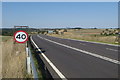
There is a bridge here which takes a major road over the canal.
| Milepost - Braunston 7 Miles | 1 mile, 2½ furlongs | |
| Brockhall Road Bridge No 21 | 1 mile | |
| Bedazzled LED Lighting Boat | 7¾ furlongs | |
| Watling Street Bridge No 22 | 6½ furlongs | |
| Dodford Road Bridge No 23 | 2¾ furlongs | |
| Daventry Development Link Road Bridge No 23A | ||
Weedon Visitor Moorings  | 2¾ furlongs | |
| Heart of England PH | 3 furlongs | |
| Weedon Station Bridge No 24 | 3¼ furlongs | |
| Milepost - Braunston 9 Miles | 4¼ furlongs | |
| Weedon Boatyard | 4½ furlongs | |
Amenities here
 Bus stop (Dodford Grange)
Bus stop (Dodford Grange)
Bus stop (Dodford Grange)
Amenities nearby at Weedon Visitor Moorings
Bus stop (Hillside Road)
Bus stop (Hillside Road)
Amenities nearby at Dodford Road Bridge No 23
Bus stop (Demand Responsive Area)
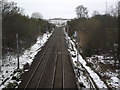
The bridge opened in November 2018 to carry the new A45 Northampton / Daventry link road over the canal and the West Coast Main Line
- Grand Union Canal Walk — associated with Grand Union Canal
- An illustrated walk along the Grand Union Canal from London to Birmingham
- THE GRAND JUNCTION CANAL - a highway laid with water. — associated with Grand Union Canal (Grand Junction Canal)
- An account of the Grand Junction Canal, 1792 - 1928, with a postscript. By Ian Petticrew and Wendy Austin.
Mouseover for more information or show routes to facility
Nearest water point
In the direction of Gayton Junction
In the direction of Norton Junction
Nearest rubbish disposal
In the direction of Gayton Junction
In the direction of Norton Junction
Nearest chemical toilet disposal
In the direction of Gayton Junction
In the direction of Norton Junction
Nearest place to turn
In the direction of Gayton Junction
In the direction of Norton Junction
Nearest self-operated pump-out
In the direction of Gayton Junction
In the direction of Norton Junction
Nearest boatyard pump-out
In the direction of Gayton Junction
In the direction of Norton Junction













There is no page on Wikipedia called “Daventry Development Link Road Bridge No 23A”