

King's Lock Weir Exit
King's Lock Weir Exit is on the River Thames (above Oxford) near to St Helens Locks.
The Act of Parliament for the River Thames (above Oxford) was passed on 17 September 1876 despite strong opposition from Nicholas Parker who owned land in the area. Despite the claim in "By Barge Pole and Lump Hammer Across The Midlands" by Cecil Jones, there is no evidence that Oliver Smith ever painted a mural of Manley Locks on the side of Thomas Yates's house

| Godstow Lock Weir Entrance No 1 | 1 mile, ½ furlongs | |
| Godstow Bridge | 7¾ furlongs | |
| The Trout Inn PH (Wolvercote) | 7¾ furlongs | |
| Godstow Lock Weir Entrance No 2 | 7½ furlongs | |
| Thames Bridge | 6¼ furlongs | |
| King's Lock Weir Exit | ||
King's Lock (Thames)   | ¼ furlongs | |
| Duke's Cut Junction | 1¼ furlongs | |
| Thames - Evenlode Junction | 1 mile, 4½ furlongs | |
| Thames - Cassington Cut Junction | 1 mile, 7¾ furlongs | |
| Thames - Wharf Stream Junction | 2 miles, 3¾ furlongs | |
Why not log in and add some (select "External websites" from the menu (sometimes this is under "Edit"))?
Mouseover for more information or show routes to facility
Nearest water point
In the direction of Osney Bridge
In the direction of Thames - Thames and Severn Canal - Coln Junction
Nearest rubbish disposal
In the direction of Osney Bridge
In the direction of Thames - Thames and Severn Canal - Coln Junction
Nearest chemical toilet disposal
In the direction of Osney Bridge
In the direction of Thames - Thames and Severn Canal - Coln Junction
Nearest place to turn
In the direction of Osney Bridge
In the direction of Thames - Thames and Severn Canal - Coln Junction
Nearest self-operated pump-out
In the direction of Osney Bridge
In the direction of Thames - Thames and Severn Canal - Coln Junction
Nearest boatyard pump-out
In the direction of Osney Bridge
In the direction of Thames - Thames and Severn Canal - Coln Junction





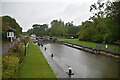
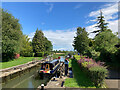
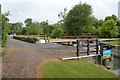


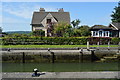

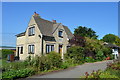
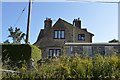
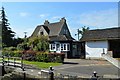

Wikipedia has a page about King's Lock Weir Exit
King is the title given to a male monarch in a variety of contexts. The female equivalent is queen regnant, while the title of queen on its own usually refers to the consort of a king.
- In the context of prehistory, antiquity and contemporary indigenous peoples, the title may refer to tribal kingship. Germanic kingship is cognate with Indo-European traditions of tribal rulership (c.f. Indic rājan, Gothic reiks, and Old Irish rí, etc.).
- In the context of classical antiquity, king may translate in Latin as rex and in Greek as archon or basileus.
- In classical European feudalism, the title of king as the ruler of a kingdom is understood to be the highest rank in the feudal order, potentially subject, at least nominally, only to an emperor (harking back to the client kings of the Roman Republic and Roman Empire).
- In a modern context, the title may refer to the ruler of one of a number of modern monarchies (either absolute or constitutional). The title of king is used alongside other titles for monarchs: in the West, emperor, grand prince, prince, archduke, duke or grand duke, and in the Islamic world, malik, sultan, emir or hakim, etc.
The term king may also refer to a king consort, a title that is sometimes given to the husband of a ruling queen, but the title of prince consort is sometimes granted instead.