
Rhondda & Swansea Bay Railway Bridge

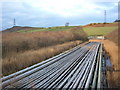
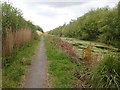
There is a bridge here which takes a disused railway over the canal.
| Port Talbot - Swansea Docks Railway Bridge | 1 mile, 5½ furlongs | |
| Tennant - Red Jacket Pill Junction | 1 mile, 3½ furlongs | |
| Neath Railway Bridge (disused) | 1 mile | |
| Llanelli - Swansea Docks Railway Bridge | 1 mile | |
| Ashleigh Terrace Road Bridge | 3¾ furlongs | |
| Rhondda & Swansea Bay Railway Bridge | ||
| Tennant - Glan-y-Wern Junction | 2¼ furlongs | |
| Port Tennant | 1 mile, 4 furlongs | |
Amenities nearby at Ashleigh Terrace Road Bridge
 Cashpoint
 Fabian Bay SS Shell Shell Shell Fuel Card
Amenities nearby at Tennant - Glan-y-Wern Junction
Blazers Caravan Co Ltd Speedy Hire
Why not log in and add some (select "External websites" from the menu (sometimes this is under "Edit"))?
Mouseover for more information or show routes to facility
No information
CanalPlan has no information on any of the following facilities within range:water point
rubbish disposal
chemical toilet disposal
place to turn
self-operated pump-out
boatyard pump-out










Wikipedia has a page about Rhondda & Swansea Bay Railway Bridge
Rhondda , or the Rhondda Valley (Welsh: Cwm Rhondda [kʊm ˈr̥ɔnða]), is a former coalmining area in South Wales, previously in Glamorgan, now a local government district, of 16 communities around the River Rhondda. It embraces two valleys – the larger Rhondda Fawr valley (mawr large) and the smaller Rhondda Fach valley (bach small) – so that the singular "Rhondda Valley" and the plural are both commonly used. In 2001, the Rhondda constituency of the National Assembly for Wales had a population of 72,443; while the Office for National Statistics counted the population as 59,602. Rhondda forms part of Rhondda Cynon Taf County Borough and of the South Wales Valleys. It is most noted for its historical coalmining industry, which peaked between 1840 and 1925. The valleys produced a strong Nonconformist movement manifest in the Baptist chapels that moulded Rhondda values in the 19th and early 20th centuries. It is also famous for male voice choirs and in sport and politics.