Cricklade Sewage Works Bridge carries a farm track over the River Thames (above Lechlade) near to London.
The River Thames (above Lechlade) was built by Exuperius Picking Junior and opened on 17 September 1835. The canal joined the sea near Lisburn. Expectations for manure traffic to Manworth never materialised and the canal never made a profit for the shareholders. Although proposals to close the River Thames (above Lechlade) were submitted to parliament in 1990, the use of the canal for cooling Birmingham power station was enough to keep it open. The one mile section between Basingstoke and Warrington was closed in 1955 after a breach at Reigate. The canal was restored to navigation and reopened in 2001 after a restoration campaign lead by the River Thames (above Lechlade) Trust.

There is a bridge here which takes a track over the canal.
| Thames - Ampney Brook Junction | 5¼ furlongs | |
| Cricklade Pipe Bridge | 4 furlongs | |
| Ermine Way Bridge | 2½ furlongs | |
| Thames - Key Junction | 2¼ furlongs | |
| Cricklade - Thames Path | ½ furlongs | |
| Cricklade Sewage Works Bridge | ||
| Thames - Churn Junction | 1 furlong | |
| High Bridge (Cricklade) | 1¾ furlongs | |
Why not log in and add some (select "External websites" from the menu (sometimes this is under "Edit"))?
Mouseover for more information or show routes to facility
Nearest water point
In the direction of Thames - Thames and Severn Canal - Coln Junction
Nearest rubbish disposal
In the direction of Thames - Thames and Severn Canal - Coln Junction
Nearest chemical toilet disposal
In the direction of Thames - Thames and Severn Canal - Coln Junction
Nearest place to turn
In the direction of Thames - Thames and Severn Canal - Coln Junction
Nearest self-operated pump-out
In the direction of Thames - Thames and Severn Canal - Coln Junction
Nearest boatyard pump-out
In the direction of Thames - Thames and Severn Canal - Coln Junction
There is no page on Wikipedia called “Cricklade Sewage Works Bridge”


![Stone Stile, Cricklade. Off Abingdon Court Lane on Wiltshire footpath CRICÂ 1 looking to the lane. The view back is [[7795820]]. by Jayne Tovey – 12 June 2024](https://s1.geograph.org.uk/geophotos/07/79/58/7795821_119d6970_120x120.jpg)
![Stone Stile, Cricklade. Off Abingdon Court Lane on Wiltshire footpath CRICÂ 1 looking away from the lane. The view in is [[7795821]]. by Jayne Tovey – 12 June 2024](https://s0.geograph.org.uk/geophotos/07/79/58/7795820_d381f2eb_120x120.jpg)


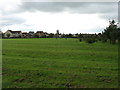
![Cricklade from the east. Taken from Fairview Fields, with the Thames Path and the river just out of shot to the right. The church is just in the next square ([[SU0993]]), but everything else is 'in square'. by David Purchase – 08 October 2016](https://s3.geograph.org.uk/geophotos/05/14/94/5149471_de8f0c3f_120x120.jpg)
![Red Lion Inn sign, 74 High Street. The sign of the early 16th century Red Lion Inn. The Red Lion is the most common pub and inn name in England, with over 600 examples. Cricklade also has a White Lion further along the High Street. [[1371581]]; http://www.theredlioncricklade.co.uk/ by P L Chadwick – 18 June 2009](https://s2.geograph.org.uk/geophotos/01/37/15/1371594_a080601d_120x120.jpg)


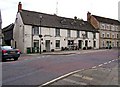
![Red Lion Inn and Cricklade High Street. In the distance, on the right, is the Red Lion Inn. On the immediate left can be seen part of St Mary's Church. This is now a Catholic church, although previously it was an Anglican Church. Of course, up to the time of the Reformation, it was a Catholic church, so it has in fact come full circle. [[1371581]]; [[527667]]. by P L Chadwick – 18 June 2009](https://s0.geograph.org.uk/geophotos/01/37/16/1371612_6deaaf2c_120x120.jpg)
![Cricklade buildings [33]. This pumping station is seen from the footpath.Cricklade is the first town downstream on the River Thames. The town was founded by the Anglo-Saxons in the 9th century at the point where the Roman Ermin Way crosses the River Thames. It is one of the thirty burhs (fortified towns) recorded in the Burghal Hidage document, which describes a system of fortresses and fortified towns built around Wessex by King Alfred. The fortifications have been extensively excavated in several places on all four of its sides. by Michael Dibb – 25 August 2019](https://s3.geograph.org.uk/geophotos/06/34/85/6348539_78903e03_120x120.jpg)


![River Thames, Cricklade. The river is flowing east towards London. There has been a lot of rain recently with more forecast. The river is running significantly higher than last year [[[7381588]]] by Brian Robert Marshall – 13 January 2023](https://s3.geograph.org.uk/geophotos/07/38/15/7381591_7bd6198f_120x120.jpg)


![Cricklade houses [24]. The Old Manor House, number 73 High Street, is 18th century. There are various extensions to the rear and the dormer casements have been removed. Listed, group II, with details at: https://historicengland.org.uk/listing/the-list/list-entry/1023115Cricklade is the first town downstream on the River Thames. The town was founded by the Anglo-Saxons in the 9th century at the point where the Roman Ermin Way crosses the River Thames. It is one of the thirty burhs (fortified towns) recorded in the Burghal Hidage document, which describes a system of fortresses and fortified towns built around Wessex by King Alfred. The fortifications have been extensively excavated in several places on all four of its sides. by Michael Dibb – 25 August 2019](https://s2.geograph.org.uk/geophotos/06/34/64/6346434_4b79bc5a_120x120.jpg)