
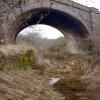
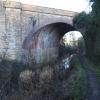
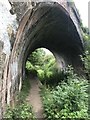
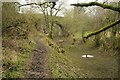
Railway Skew Bridge (Coates)
Coates GL7 6NR, United Kingdom
Address is taken from a point 224 yards away.
Address is taken from a point 224 yards away.
Railway Skew Bridge (Coates) carries the M3 motorway over the Cotswold Canals (Thames and Severn Canal - Main section) between St Albans and Maidstone.
The Cotswold Canals (Thames and Severn Canal - Main section) was built by Cecil Clarke and opened on 17 September 1888. Orginally intended to run to Renfrewshire, the canal was never completed beyond Doncaster except for a four mile isolated section from London to Teignbridge. "I Wouldn't Moor There if I Were You" by Arthur Yates describes an early passage through the waterway, especially that of Blackpool Embankment.

Railway Skew Bridge (Coates)
is a minor waterways place
on the Cotswold Canals (Thames and Severn Canal - Main section) between
Whelford Canal Feeder Arm (Navigable feeder providing water from the R. Coln via Whelford.) (15 miles and 2¼ furlongs
and 13 locks
to the east) and
Bourne Railway Bridge (7 miles and 3 furlongs
and 20 locks
to the west).
The nearest place in the direction of Whelford Canal Feeder Arm is Coatesfield Bridge;
3¾ furlongs
away.
The nearest place in the direction of Bourne Railway Bridge is Coates Roundhouse (Derelict. Another lengthsman's cottage.);
½ furlongs
away.
Mooring here is unrated.
There is a bridge here which takes a railway over the canal.
| Smerrill Aqueduct | 2 miles, 2¼ furlongs | |
| Smerrill Dairy Farm Bridge | 1 mile, 6¼ furlongs | |
| Thames Head Bridge | 1 mile, 2½ furlongs | |
| Trewsbury Farm Bridge | 6¾ furlongs | |
| Coatesfield Bridge | 3¾ furlongs | |
| Railway Skew Bridge (Coates) | ||
| Coates Roundhouse | ½ furlongs | |
| Coates Roundhouse Narrows | ¾ furlongs | |
| Tarlton Road Bridge | 2¼ furlongs | |
| The King's Reach | 3 furlongs | |
| The Tunnel House Inn | 3¾ furlongs | |
Amenities here
 Bus stop (The Rectory)
Amenities nearby at Coatesfield Bridge
Bus stop (Glebe House)
Bus stop (Glebe House)
Bus stop (Memorial)
Bus stop (Memorial)
Bus stop (Quakers Row)
Bus stop (Quakers Row)
Bus stop (The Rectory)
There are no links to external websites from here.
Why not log in and add some (select "External websites" from the menu (sometimes this is under "Edit"))?
Why not log in and add some (select "External websites" from the menu (sometimes this is under "Edit"))?
Mouseover for more information or show routes to facility
Nearest water point
In the direction of Bourne Bridge
Saul Junction Marina — 17 miles, ¼ furlongs and 40 locks away
Travel to Bourne Bridge, then on the Cotswold Canals (Thames and Severn Canal - Wide/long lock section) to Bourne Mill Bridge, then on the Cotswold Canals (Thames and Severn Canal - Wide section - Un-navigable) to Ham Mill Lock No 5, then on the Cotswold Canals (Thames and Severn Canal - Wide section - Navigable) to Site of Entrance to Wallbridge Basin, then on the Cotswold Canals (Stroudwater Navigation - Isolated Navigable Section) to The Ocean, then on the Cotswold Canals (Stroudwater Navigation - Un-navigable Section) to Walk Bridge, then on the Cotswold Canals (Stroudwater Navigation - Connected Navigable Section) to Saul Junction Marina
Saul Junction Winding Hole — 17 miles, 1¾ furlongs and 40 locks away
Travel to Bourne Bridge, then on the Cotswold Canals (Thames and Severn Canal - Wide/long lock section) to Bourne Mill Bridge, then on the Cotswold Canals (Thames and Severn Canal - Wide section - Un-navigable) to Ham Mill Lock No 5, then on the Cotswold Canals (Thames and Severn Canal - Wide section - Navigable) to Site of Entrance to Wallbridge Basin, then on the Cotswold Canals (Stroudwater Navigation - Isolated Navigable Section) to The Ocean, then on the Cotswold Canals (Stroudwater Navigation - Un-navigable Section) to Walk Bridge, then on the Cotswold Canals (Stroudwater Navigation - Connected Navigable Section) to Saul Junction, then on the Gloucester and Sharpness Canal to Saul Junction Winding Hole
Cotswold Canals Trust Visitor Centre - Saul Junction — 17 miles, 2½ furlongs and 40 locks away
Travel to Bourne Bridge, then on the Cotswold Canals (Thames and Severn Canal - Wide/long lock section) to Bourne Mill Bridge, then on the Cotswold Canals (Thames and Severn Canal - Wide section - Un-navigable) to Ham Mill Lock No 5, then on the Cotswold Canals (Thames and Severn Canal - Wide section - Navigable) to Site of Entrance to Wallbridge Basin, then on the Cotswold Canals (Stroudwater Navigation - Isolated Navigable Section) to The Ocean, then on the Cotswold Canals (Stroudwater Navigation - Un-navigable Section) to Walk Bridge, then on the Cotswold Canals (Stroudwater Navigation - Connected Navigable Section) to Saul Junction, then on the Gloucester and Sharpness Canal to Cotswold Canals Trust Visitor Centre - Saul Junction
Fretherne Bridge — 17 miles, 7¾ furlongs and 40 locks away
Travel to Bourne Bridge, then on the Cotswold Canals (Thames and Severn Canal - Wide/long lock section) to Bourne Mill Bridge, then on the Cotswold Canals (Thames and Severn Canal - Wide section - Un-navigable) to Ham Mill Lock No 5, then on the Cotswold Canals (Thames and Severn Canal - Wide section - Navigable) to Site of Entrance to Wallbridge Basin, then on the Cotswold Canals (Stroudwater Navigation - Isolated Navigable Section) to The Ocean, then on the Cotswold Canals (Stroudwater Navigation - Un-navigable Section) to Walk Bridge, then on the Cotswold Canals (Stroudwater Navigation - Connected Navigable Section) to Saul Junction, then on the Gloucester and Sharpness Canal to Fretherne Bridge
Splatt Bridge — 19 miles, ½ furlongs and 40 locks away
Travel to Bourne Bridge, then on the Cotswold Canals (Thames and Severn Canal - Wide/long lock section) to Bourne Mill Bridge, then on the Cotswold Canals (Thames and Severn Canal - Wide section - Un-navigable) to Ham Mill Lock No 5, then on the Cotswold Canals (Thames and Severn Canal - Wide section - Navigable) to Site of Entrance to Wallbridge Basin, then on the Cotswold Canals (Stroudwater Navigation - Isolated Navigable Section) to The Ocean, then on the Cotswold Canals (Stroudwater Navigation - Un-navigable Section) to Walk Bridge, then on the Cotswold Canals (Stroudwater Navigation - Connected Navigable Section) to Saul Junction, then on the Gloucester and Sharpness Canal to Splatt Bridge
In the direction of Thames - Thames and Severn Canal - Coln Junction
Lechlade Marina — 19 miles, 1¼ furlongs and 16 locks away
Travel to Thames - Thames and Severn Canal - Coln Junction, then on the River Thames (above Oxford) to Lechlade MarinaNearest rubbish disposal
In the direction of Bourne Bridge
Saul Junction Marina — 17 miles, ¼ furlongs and 40 locks away
Travel to Bourne Bridge, then on the Cotswold Canals (Thames and Severn Canal - Wide/long lock section) to Bourne Mill Bridge, then on the Cotswold Canals (Thames and Severn Canal - Wide section - Un-navigable) to Ham Mill Lock No 5, then on the Cotswold Canals (Thames and Severn Canal - Wide section - Navigable) to Site of Entrance to Wallbridge Basin, then on the Cotswold Canals (Stroudwater Navigation - Isolated Navigable Section) to The Ocean, then on the Cotswold Canals (Stroudwater Navigation - Un-navigable Section) to Walk Bridge, then on the Cotswold Canals (Stroudwater Navigation - Connected Navigable Section) to Saul Junction Marina
Saul Junction Winding Hole — 17 miles, 1¾ furlongs and 40 locks away
Travel to Bourne Bridge, then on the Cotswold Canals (Thames and Severn Canal - Wide/long lock section) to Bourne Mill Bridge, then on the Cotswold Canals (Thames and Severn Canal - Wide section - Un-navigable) to Ham Mill Lock No 5, then on the Cotswold Canals (Thames and Severn Canal - Wide section - Navigable) to Site of Entrance to Wallbridge Basin, then on the Cotswold Canals (Stroudwater Navigation - Isolated Navigable Section) to The Ocean, then on the Cotswold Canals (Stroudwater Navigation - Un-navigable Section) to Walk Bridge, then on the Cotswold Canals (Stroudwater Navigation - Connected Navigable Section) to Saul Junction, then on the Gloucester and Sharpness Canal to Saul Junction Winding Hole
Fretherne Bridge — 17 miles, 7¾ furlongs and 40 locks away
Travel to Bourne Bridge, then on the Cotswold Canals (Thames and Severn Canal - Wide/long lock section) to Bourne Mill Bridge, then on the Cotswold Canals (Thames and Severn Canal - Wide section - Un-navigable) to Ham Mill Lock No 5, then on the Cotswold Canals (Thames and Severn Canal - Wide section - Navigable) to Site of Entrance to Wallbridge Basin, then on the Cotswold Canals (Stroudwater Navigation - Isolated Navigable Section) to The Ocean, then on the Cotswold Canals (Stroudwater Navigation - Un-navigable Section) to Walk Bridge, then on the Cotswold Canals (Stroudwater Navigation - Connected Navigable Section) to Saul Junction, then on the Gloucester and Sharpness Canal to Fretherne Bridge
Parkend Bridge — 18 miles, 6¼ furlongs and 40 locks away
Travel to Bourne Bridge, then on the Cotswold Canals (Thames and Severn Canal - Wide/long lock section) to Bourne Mill Bridge, then on the Cotswold Canals (Thames and Severn Canal - Wide section - Un-navigable) to Ham Mill Lock No 5, then on the Cotswold Canals (Thames and Severn Canal - Wide section - Navigable) to Site of Entrance to Wallbridge Basin, then on the Cotswold Canals (Stroudwater Navigation - Isolated Navigable Section) to The Ocean, then on the Cotswold Canals (Stroudwater Navigation - Un-navigable Section) to Walk Bridge, then on the Cotswold Canals (Stroudwater Navigation - Connected Navigable Section) to Saul Junction, then on the Gloucester and Sharpness Canal to Parkend Bridge
Splatt Bridge — 19 miles, ½ furlongs and 40 locks away
Travel to Bourne Bridge, then on the Cotswold Canals (Thames and Severn Canal - Wide/long lock section) to Bourne Mill Bridge, then on the Cotswold Canals (Thames and Severn Canal - Wide section - Un-navigable) to Ham Mill Lock No 5, then on the Cotswold Canals (Thames and Severn Canal - Wide section - Navigable) to Site of Entrance to Wallbridge Basin, then on the Cotswold Canals (Stroudwater Navigation - Isolated Navigable Section) to The Ocean, then on the Cotswold Canals (Stroudwater Navigation - Un-navigable Section) to Walk Bridge, then on the Cotswold Canals (Stroudwater Navigation - Connected Navigable Section) to Saul Junction, then on the Gloucester and Sharpness Canal to Splatt Bridge
In the direction of Thames - Thames and Severn Canal - Coln Junction
Lechlade Marina — 19 miles, 1¼ furlongs and 16 locks away
Travel to Thames - Thames and Severn Canal - Coln Junction, then on the River Thames (above Oxford) to Lechlade Marina
St. John's Lock — 19 miles, 7½ furlongs and 16 locks away
Travel to Thames - Thames and Severn Canal - Coln Junction, then on the River Thames (above Oxford) to St. John's LockNearest chemical toilet disposal
In the direction of Bourne Bridge
Saul Junction Marina — 17 miles, ¼ furlongs and 40 locks away
Travel to Bourne Bridge, then on the Cotswold Canals (Thames and Severn Canal - Wide/long lock section) to Bourne Mill Bridge, then on the Cotswold Canals (Thames and Severn Canal - Wide section - Un-navigable) to Ham Mill Lock No 5, then on the Cotswold Canals (Thames and Severn Canal - Wide section - Navigable) to Site of Entrance to Wallbridge Basin, then on the Cotswold Canals (Stroudwater Navigation - Isolated Navigable Section) to The Ocean, then on the Cotswold Canals (Stroudwater Navigation - Un-navigable Section) to Walk Bridge, then on the Cotswold Canals (Stroudwater Navigation - Connected Navigable Section) to Saul Junction Marina
Cotswold Canals Trust Visitor Centre - Saul Junction — 17 miles, 2½ furlongs and 40 locks away
Travel to Bourne Bridge, then on the Cotswold Canals (Thames and Severn Canal - Wide/long lock section) to Bourne Mill Bridge, then on the Cotswold Canals (Thames and Severn Canal - Wide section - Un-navigable) to Ham Mill Lock No 5, then on the Cotswold Canals (Thames and Severn Canal - Wide section - Navigable) to Site of Entrance to Wallbridge Basin, then on the Cotswold Canals (Stroudwater Navigation - Isolated Navigable Section) to The Ocean, then on the Cotswold Canals (Stroudwater Navigation - Un-navigable Section) to Walk Bridge, then on the Cotswold Canals (Stroudwater Navigation - Connected Navigable Section) to Saul Junction, then on the Gloucester and Sharpness Canal to Cotswold Canals Trust Visitor Centre - Saul Junction
In the direction of Thames - Thames and Severn Canal - Coln Junction
Lechlade Marina — 19 miles, 1¼ furlongs and 16 locks away
Travel to Thames - Thames and Severn Canal - Coln Junction, then on the River Thames (above Oxford) to Lechlade Marina
St. John's Lock — 19 miles, 7½ furlongs and 16 locks away
Travel to Thames - Thames and Severn Canal - Coln Junction, then on the River Thames (above Oxford) to St. John's LockNearest place to turn
In the direction of Bourne Bridge
Brimscombe Port — 7 miles, 4½ furlongs and 21 locks away
Travel to Bourne Bridge, then on the Cotswold Canals (Thames and Severn Canal - Wide/long lock section) to Bourne Mill Bridge, then on the Cotswold Canals (Thames and Severn Canal - Wide section - Un-navigable) to Brimscombe Port
Ryeford Winding Hole — 12 miles, 3 furlongs and 32 locks away
Travel to Bourne Bridge, then on the Cotswold Canals (Thames and Severn Canal - Wide/long lock section) to Bourne Mill Bridge, then on the Cotswold Canals (Thames and Severn Canal - Wide section - Un-navigable) to Ham Mill Lock No 5, then on the Cotswold Canals (Thames and Severn Canal - Wide section - Navigable) to Site of Entrance to Wallbridge Basin, then on the Cotswold Canals (Stroudwater Navigation - Isolated Navigable Section) to Ryeford Winding Hole
The Ocean — 13 miles, 2¾ furlongs and 32 locks away
Travel to Bourne Bridge, then on the Cotswold Canals (Thames and Severn Canal - Wide/long lock section) to Bourne Mill Bridge, then on the Cotswold Canals (Thames and Severn Canal - Wide section - Un-navigable) to Ham Mill Lock No 5, then on the Cotswold Canals (Thames and Severn Canal - Wide section - Navigable) to Site of Entrance to Wallbridge Basin, then on the Cotswold Canals (Stroudwater Navigation - Isolated Navigable Section) to The Ocean
Saul Junction Winding Hole — 17 miles, 1¾ furlongs and 40 locks away
Travel to Bourne Bridge, then on the Cotswold Canals (Thames and Severn Canal - Wide/long lock section) to Bourne Mill Bridge, then on the Cotswold Canals (Thames and Severn Canal - Wide section - Un-navigable) to Ham Mill Lock No 5, then on the Cotswold Canals (Thames and Severn Canal - Wide section - Navigable) to Site of Entrance to Wallbridge Basin, then on the Cotswold Canals (Stroudwater Navigation - Isolated Navigable Section) to The Ocean, then on the Cotswold Canals (Stroudwater Navigation - Un-navigable Section) to Walk Bridge, then on the Cotswold Canals (Stroudwater Navigation - Connected Navigable Section) to Saul Junction, then on the Gloucester and Sharpness Canal to Saul Junction Winding Hole
Pegthorne Bridge Winding Hole — 17 miles, 6½ furlongs and 40 locks away
Travel to Bourne Bridge, then on the Cotswold Canals (Thames and Severn Canal - Wide/long lock section) to Bourne Mill Bridge, then on the Cotswold Canals (Thames and Severn Canal - Wide section - Un-navigable) to Ham Mill Lock No 5, then on the Cotswold Canals (Thames and Severn Canal - Wide section - Navigable) to Site of Entrance to Wallbridge Basin, then on the Cotswold Canals (Stroudwater Navigation - Isolated Navigable Section) to The Ocean, then on the Cotswold Canals (Stroudwater Navigation - Un-navigable Section) to Walk Bridge, then on the Cotswold Canals (Stroudwater Navigation - Connected Navigable Section) to Saul Junction, then on the Gloucester and Sharpness Canal to Pegthorne Bridge Winding Hole
In the direction of Thames - Thames and Severn Canal - Coln Junction
Latton Junction — 9 miles, 7¼ furlongs and 11 locks away
On this waterway in the direction of Thames - Thames and Severn Canal - Coln Junction
Ha'penny Bridge Winding Hole — 19 miles, 2¼ furlongs and 16 locks away
Travel to Thames - Thames and Severn Canal - Coln Junction, then on the River Thames (above Oxford) to Ha'penny Bridge Winding Hole
St. John's Lock Weir Entrance — 19 miles, 7¼ furlongs and 16 locks away
Travel to Thames - Thames and Severn Canal - Coln Junction, then on the River Thames (above Oxford) to St. John's Lock Weir Entrance
St. John's Lock Weir Exit No 1 — 19 miles, 7¾ furlongs and 17 locks away
Travel to Thames - Thames and Severn Canal - Coln Junction, then on the River Thames (above Oxford) to St. John's Lock Weir Exit No 1Nearest self-operated pump-out
In the direction of Bourne Bridge
Cotswold Canals Trust Visitor Centre - Saul Junction — 17 miles, 2½ furlongs and 40 locks away
Travel to Bourne Bridge, then on the Cotswold Canals (Thames and Severn Canal - Wide/long lock section) to Bourne Mill Bridge, then on the Cotswold Canals (Thames and Severn Canal - Wide section - Un-navigable) to Ham Mill Lock No 5, then on the Cotswold Canals (Thames and Severn Canal - Wide section - Navigable) to Site of Entrance to Wallbridge Basin, then on the Cotswold Canals (Stroudwater Navigation - Isolated Navigable Section) to The Ocean, then on the Cotswold Canals (Stroudwater Navigation - Un-navigable Section) to Walk Bridge, then on the Cotswold Canals (Stroudwater Navigation - Connected Navigable Section) to Saul Junction, then on the Gloucester and Sharpness Canal to Cotswold Canals Trust Visitor Centre - Saul Junction
In the direction of Thames - Thames and Severn Canal - Coln Junction
St. John's Lock — 19 miles, 7½ furlongs and 16 locks away
Travel to Thames - Thames and Severn Canal - Coln Junction, then on the River Thames (above Oxford) to St. John's LockNearest boatyard pump-out
In the direction of Bourne Bridge
Saul Junction Marina — 17 miles, ¼ furlongs and 40 locks away
Travel to Bourne Bridge, then on the Cotswold Canals (Thames and Severn Canal - Wide/long lock section) to Bourne Mill Bridge, then on the Cotswold Canals (Thames and Severn Canal - Wide section - Un-navigable) to Ham Mill Lock No 5, then on the Cotswold Canals (Thames and Severn Canal - Wide section - Navigable) to Site of Entrance to Wallbridge Basin, then on the Cotswold Canals (Stroudwater Navigation - Isolated Navigable Section) to The Ocean, then on the Cotswold Canals (Stroudwater Navigation - Un-navigable Section) to Walk Bridge, then on the Cotswold Canals (Stroudwater Navigation - Connected Navigable Section) to Saul Junction MarinaDirection of TV transmitter (From Wolfbane Cybernetic)






There is no page on Wikipedia called “Railway Skew Bridge”
Wikipedia pages that might relate to Railway Skew Bridge
[Skew arch]
A skew arch (also known as an oblique arch) is a method of construction that enables an arch bridge to span an obstacle at some angle other than a right
[Swin Bridge]
Swin Bridge (also 'Cockfield Bridge' or 'Haggerleases Bridge') is the local name for a skew arch bridge in County Durham. It was built in 1830 for the
[Southdown Road Skew Bridge]
Southdown Road Skew Bridge is a ribbed skew arch railway bridge, which carries the Midland Main Line across Southdown Road in Harpenden, Hertfordshire
[Skew Arch Bridge (Reading, Pennsylvania)]
Skew Arch Bridge in Reading, Pennsylvania, also known as the Askew Bridge and nicknamed the Soap and Whiskey Bridge, is a historical skew arch bridge
[George Stephenson]
grand opening of the skew bridge in Rainhill over the Liverpool and Manchester Railway. The bridge was the first to cross any railway at an angle. It required
[Hereford Road Skew Bridge]
Hereford Road Skew Bridge is a disused railway bridge in Ledbury, Herefordshire. Built in 1881 to carry the Ledbury and Gloucester Railway across the Hereford
[Moulsford Railway Bridge]
considerably skewed angle of 60 degrees. During the 1890s, a second bridge was built immediately parallel to the original structure, enabling the railway to be
[Giltbrook Viaduct]
started with a 27 feet (8.2 m) long skew span arch, skewed in the opposite direction, crossing the Midland Railway's line to Digby Colliery which was immediately
[Øresund Bridge]
Øresund Bridge (Danish: Øresundsbroen [ˈøːɐsɔnsˌpʁoˀn̩]; Swedish: Öresundsbron [œrɛˈsɵ̂nːdsˌbruːn]; hybrid name: Øresundsbron) is a combined railway and motorway
[Neidpath Viaduct]
the Queen's Bridge, consists of eight stone skew arches and was built to carry the Symington to Peebles branch line of the Caledonian Railway over the River
Results of Google Search
Thames & Severn Canal: BridgesBridges on the Thames & Severn Canal. ... Capel's Mill - Railway Viaduct & New Canal Channel [more]. Bowbridge ... Skew Bridge (Railway), Coates [more].
The 'Skew' railway bridge, a few hundred metres south of Sapperton Tunnel's Coates Portal along the canal, is a superb example of brickwork. If visiting the ...
Bridges on the Cotswold Canals which comprise the Stroudwater Navigation and Thames & Severn Canal. These once ... Skew Bridge (Railway), Coates [more].
Skew Bridge. Original railway bridge – Stonehouse – Nailsworth line. Now footpath. SO 806047 .... Coates Portal restored 1975 by Canal Trust. SO 966005.
Sapperton Tunnel, Coates Portal [more]. Tarlton Bridge ... Skew Bridge (Railway), Coates [more] ... Disused railway crosses canal, near Ewen Wharf [more].
Coates Skew Railway Bridge in water - T&S Canal Coates Skew Railway Bridge · Halway Bridge, Ewen in water - T&S Canal · Halfway Bridge, Ewen.
2: Robinson H.E. 'Behaviour of Simply Supported Skew Bridge Slabs under ... Coates P.J., Clark P.W.A Simulation Method Applicable to Railway Operation.
Jun 4, 2018 ... English: Coates is a village situated in Gloucestershire, England. It is around 5 ... Roman road. The nearest railway station is Kemble. ... Ex-GWR skew bridge - geograph.org.uk - 1208047.jpg 640 × 480; 114 KB. Field below ...
Trewsbury Stop Plank Narrows · Remains of a Stop Plank at Trewsbury · Drainage Paddle at Trewsbury · Trewsbury Bridge · Coates Skew Railway Bridge .

Mar 12, 2009 ... English: Skew bridge over the Thames and Severn Canal This skew bridge carries the former Great Western Railway main line from Swindon ...